Showing posts with label crushed red pepper. Show all posts

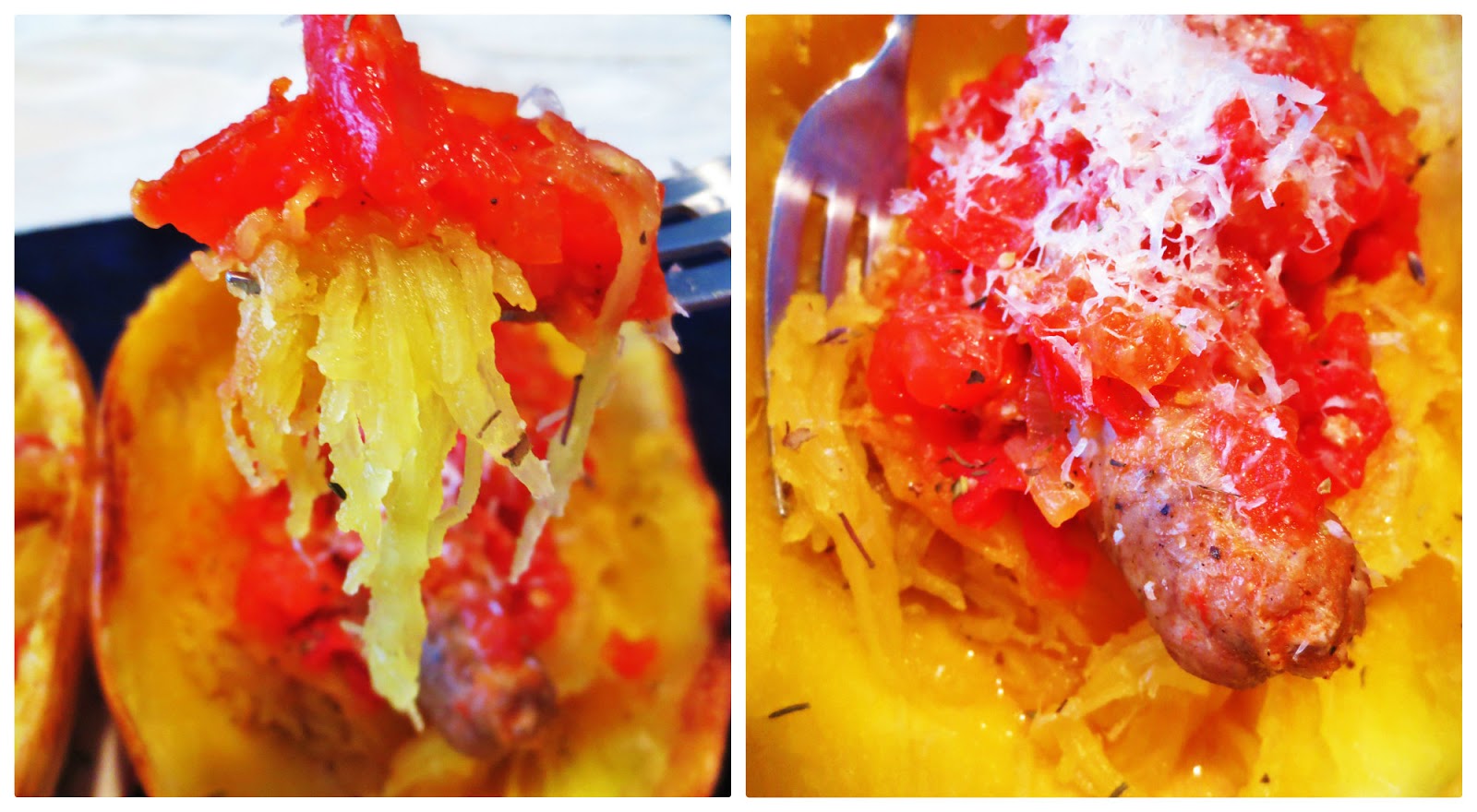
Roasted Spaghetti Squash with Crushed Tomato Marinara and Sweet Italian Sausage


Let me just preface this post by saying that never-have-I-ever had a substitute for spaghetti that was this good.  And I was raised on pasta. As in, we had it more than one night a week growing up. Pasta definitely fills you up and tastes delicious, but the problem with eating a main course that is mostly carbs is that you feel hungry a LOT sooner after eating. That's why balancing fiber and protein in your meal is imperative. This low-carb dinner does the trick!

Roll up your sleeves, and start by prepping your squash. Just a warning: this is hard. If you've ever tried to carve a pumpkin, or cut a butternut squash, you know how tricky gourds can be. Just take your time and be careful; it's easy for your knife to get away from you when slicing through the flesh of the squash. Cut your spaghetti squash in half lengthwise until you have two pieces. Take a spoon, and scrape out the seeds, but don't throw them away; you can season and roast them for a perfect snack or in salads! Recipe for that to come later. You can see the delicate strands that make up the flesh of the squash. Season with olive oil, salt, and pepper, place them flesh side down on an oiled cookie sheet, and set in a 400 degree F oven for 30-35 minutes. 


While your squash is roasting, it's time to make the base for your crushed marinara. The texture of this sauce is incredibly substantial, and when you don't have the real pasta, you'll want something with a little bite to it. Melt 1T butter in a non-stick saute pan over med-high heat. Dice 1 large white onion, and 4 medium cloves of garlic and add to the pan. Cook until onions are somewhat caramelized and translucent. Then chop 7 large, vine-ripened tomatoes and throw in the pan with the onions. Add 1tsp salt, 1tsp ground black pepper, 1/2tsp crushed red pepper flakes, and 2tsp dried Italian herbs (these usually have oregano, basil, thyme, etc.). Cover and reduce heat to medium; cook for 20 minutes, using the back of a wooden spoon, periodically, to break down tomatoes. 


In a separate pan (I use a cast iron skillet), brown 5 large, sweet Italian sausages over high heat. (TayTip: to cook perfect sausages, always have a full measuring cup of water next to the pan. Pour about 1/2 cup in with the sausage. This allows them to cook more evenly without burning the outsides. When the water evaporates, add more. Continue this for approximately 15 minutes, then let the last batch of water evaporate and brown up the outside edges of the sausage.) Transfer the entire contents of the marinara sauce in with the sausage, and reduce heat to low. Cover, and simmer for an additional 20 minutes. The sausage will finish cooking in the sauce, but depending on your pans and stove, you'll want to make a small incision in the middle of one to make sure they're fully cooked (no longer pink). 


When your squash is done, remove from the oven, and let it cool for 10-15 minutes. Once cool, take a large serving spoon, and scoop the strands from the skin. Transfer to a large bowl and drizzle with 1T olive oil. Salt and pepper to taste. See the strands! Just like real spaghetti!


When the sauce has finished cooking, I like to scoop some of the squash strands back into the skins to serve. They're just like bread bowls from Panera, and make for a great presentation. Top with as much grated parmigiano reggiano as your little heart desires. 


This is a great meal to show off your ingenuity in the kitchen. You'll be amazed at how great a substitute it is for actual pasta. The squash is not overcooked (nobody likes mushy baby food), and gives a little resistance when biting down. It really doesn't have much of its own flavor. You get a little bit of a pumpkin/butternut squash flavor, but for the most part, it takes on the taste of the marinara, which by the way is perfectly savory. Sometimes when I make marinara, I'll add a little bit of honey to offset the acidity, but given the natural sweetness of the squash (and the sausage), I decided not to. The tomatoes are crushed and smushed and wonderfully hearty with a nice kick from the crushed red pepper. And lastly, the sweet Italian sausage. If you've had it, you know what I'm talking about. If you haven't, go buy some. These are from this wonderful shop in Arlington, VA, that my grandma used buy from when she lived there. She used to serve these for Christmas dinner with spaghetti and meatballs or her famous lasagna. The gentle fennel seed flavor is really the mark of a good sweet sausage, and it comes through with stunning clarity against the other flavors.  This is such a great meal. I felt fully satisfied, wasn't hungry later, and heck, anytime you can use a vegetable in place of a grain, I'm definitely in. 

Questions, comments, concerns below. Buon appetito!

Smoky Crab and Tomato Bisque with Sage Goat Cheese


With the rain yesterday, I really wanted a bowl of something warm to cozy up to. I know what you're thinking. Soup when it's 85 degrees out? But just hear me out: all the ingredients are in season now, so you won't get them this fresh any other time of year, and it's so easy, you'll wish you could make it all year round. Crab is obviously great in the summer and the tomatoes my aunt gave me were just perfect. The term bisque refers to a type of soup originating in classical French cuisine. It is a creamy seafood soup that usually has a smooth consistency and is made from seafood stock. It is also sometimes incorrectly used to refer to creamy soups made from pureed, cooked vegetables like butternut squash. I cut a few corners in mine that I'll explain later because 1. sometimes you're just not in the mood to make everything perfect, and 2. sometimes you just don't have time. I will say this though, there is always a time and place to really put a lot of effort into your meals, and I try to do that as often as possible, but sometimes you just can't for whatever reason. Besides, you're a hard-working cook; you deserve delicious food as soon as you can make it! Alright enough, onto the food...

I started by opening a bottle of pinot noir to drink to let it breathe. This is one of the lightest red wines, and for this recipe, we're going for as light as possible with the ingredients since it's a cream-based bisque. Then I heated 2tsp of olive oil in my large cast iron skillet. Ok, side note: if I had to choose a favorite kitchen tool, it would probably be a three-way tie between my microplane, my large chef's knife, and my cast iron skillet. Seriously, there is just something magical about the flavor a seasoned skillet imparts. And since it is one solid piece of iron, it evenly distributes the heat over the surface of the pan more so than any cooking pan I've used. 

Once your oil is nice and hot, add one medium diced white onion and a large pinch of salt, and walk away from the pan. You want the onions to slightly caramelize and if you move them around constantly, they won't have a chance to keep contact with the pan in order to do so. (TayTip: only salt your onions when you want to caramelize them. Salting them releases their water content and allows the natural sugars to caramelize.) They will start to brown and burn in some places, but that's ok because you will deglaze the skillet with 2 cups of the pinot noir. Then add 5 large diced red tomatoes. Don't worry about dicing them too small because they cook down. Make sure to put all the juice and seeds in the pan too. You want as much moisture as possible, and tomatoes are a very juicy fruit. Then add 2tsp of smoked Hungarian paprika. This is an incredible spice, and I recommend using it in place of your typical paprika. If you've ever had a burger from a charcoal grill as opposed to one cooked on a stove, you know what a difference the smoked flavor can give. Cook uncovered over medium-high heat for 10-15 minutes until it reduces by 1/3. Use the back of a wooden spoon to occasionally smush the tomatoes as they cook down. 


Now take this base for your bisque, transfer to a blender or food processor, and pulse a few times until the large chunks of tomato and onion are smooth. If I was making a traditional bisque, I would take a mesh strainer and strain out the seeds and any pieces of tomato not pureed, but this is where I cut a corner. Transfer your pureed sauce back into the pan and put the heat on low. Next, add 1tsp of crushed red pepper flakes. It's important to add them after the pureeing process so that they have time to slowly release their spice. Then add 1cup of cooked crab meat. Lump, claw, it doesn't really matter, use whatever type of meat you like. This is an easy meal, remember? And last but not least, add 1cup of heavy cream. Here's where the decadence comes into play. Now let it sit because if you're making this to eat immediately like I was, this is the only time the flavors will have to meld together before you get the first meal out of the bisque.  


If you noticed, I really haven't added much seasoning to the bisque other than salt, paprika, and crushed red pepper. I didn't even use garlic, people, so that should've been a red flag! This is because I don't want anything to overpower the gentle, sweet flavor of the crab meat. It's very easy to obstruct that flavor with loads of garlic and a lot of herbs, so I decided to stick to a single vein and only add one herb at the end. This is where the sage goat cheese happens. This is very similar to a compound butter, and is just as easy to make. First take your goat cheese out of the fridge so it can warm up a little. Setting it beside the warm stove burner works perfectly. Then take 18-20 small sage leaves and chop them as small as you can get them. Almost like a paste (TayTip: you can chop the sage much more easily by stacking the leaves on top of each other in a single pile). You should have a little less than 1/4 cup at the end. Mix with 10oz. of goat cheese and 1tsp of cracked black pepper. To store, lie a long piece of saran wrap over a cutting board and pile the mixture on top. Take one side of the saran wrap and fold it over, then slowly roll and mold the cheese until you have a log shape, folding over the other piece of saran wrap. Twist the ends and store in the fridge. This allows you to slice little medallions to place atop the hot bisque. 


The next step is to EAT this delicious bisque. Slice a couple of goat cheese coins and set them right on top of your steaming bowl. 


As the cheese melts, the sage reaches the warm orange lava and its earthy, woodsy flavor turns into perfume. If Kennedy could put a man on the moon FORTY-FOUR years ago, why haven't we developed smell-o-vision yet? But I digress. Sage has also been used in teas, salves, and aromatherapy for centuries to calm nerves and reduce anxiety. Perfect for bisque on a rainy day, right? I can't tell you how wonderfully sweet the crab meat is. You really need to make this! The Hungarian paprika gives just enough punch to have a little tussle with the sweet crab and tangy goat cheese. The ultimate fight for flavor. But the little kiss of pinot noir makes everyone shake hands at the end of the match...I mean meal. The next time you want something warm and flavorful on a rainy day, make this bisque...tomato soup will never seem the same.  Buon appetito!


Slow Cooker Boneless Short Ribs with Walnut Basil Pesto


Can we just stop to have a little applause for alcohol? I mean is there anything that it can't make taste phenomenal? Seriously. And not just any alcohol, wine. White in this case. When it comes to wine and meat, they're basically a match made in culinary heaven. Ok, let's be honest, anything cooked with alcohol is a match made in  culinary heaven. I don't have a problem, I promise! Try incorporating wine into the cooking process of your next dinner (and I don't mean drink it while you're cooking, although that is an acceptable practice in my book 99% of the time) and taste the insane flavor it imparts. You can't beat it. Nothing can mimic that taste. 

Since I made fish earlier this week, and that's usually what we have on Fridays for dinner, I decided to go the opposite direction and cook some good ol' red meat. I saw some boneless pork short ribs and decided they looked impeccable. And let me just tell you, the slow cooker is a godsend when cooking pork. Like scrambled eggs, they're best cooked slowly. Giving the connective tissue time to break down over a period of time in the cooker produces a juicy and tender rib (TayTip: get your butcher to leave a little bit of marbling--the white fat--on the ribs if you know you're not going to be cooking them for a couple of days. The fat helps retain moisture within the muscle). BUT, you always have to have a good flavorful topping/sauce to go with your ribs. I wasn't really feeling typical BBQ sauce, so I decided to make my pesto. Incorporating pesto with meat is a great use of this versatile Italian sauce. So let's start there...

This pesto is the traditional recipe that originated in Genoa, Italy, except for one ingredient. The name literally means to pound or crush, referencing the conventional preparing vessel used: a mortal and pestle (see the same prefix?) A mortal and pestle is currently on my wishlist, so I use a food processor. Doesn't give as rustic a consistency, but it does the trick. So, put about two cups of basil leaves, the juice of 2 small lemons, and 4 raw garlic cloves into your processor and pulse until the basil is broken down. 


Now for the salty part: freshly grated parmigiano reggiano. This is not the stuff in the bottle with the green lid, which can be good for other recipes, but not this one. The difference is that parmigiano reggiano is made under strict Italian Denominazione di Origine Controllata ("controlled designation of origin") laws--kind of like the USDA. You know how champagne can only be called such if it's made in the Champagne region of France? Same thing with parmigiano reggiano. It must follow the rules and be made in certain regions in Italy; Parma, Reggio-Emilia, and Modena to name a few. SO this is the real deal good stuff! You'll need about 1/4 cup grated right into the processor. Pesto is customarily made using pine nuts, but I didn't have any, so I decided to toast some walnuts and throw them in instead (TayTip: chefs often do, and you can make non-traditional pesto using different herbs and nuts. I've done sage and almonds before and it turns out great, so don't be scared to deviate a little. Especially if you have an allergy to a certain nut). The last step is to add a small pinch of salt because the cheese is very salty, some pepper, and turn the processor to the "ON" position. As it's running, slowly stream in 1/2 cup of olive oil. It should be somewhere between a loose vinaigrette and a paste, but you can tweak the oil and add more or less depending on how you like your consistency. 


 Put it in a container or bowl and drizzle more oil on top; you always want to cover leftover pesto with oil to keep it from drying out. This can obviously be used in a plethora of different dishes: pasta, salads, as a marinade, or simply as a dip with veggies or your favorite chips/crackers.  Let it sit in the fridge until you're ready to eat it with your meat. 

Speaking of which, let's move onto the meat. Start by quartering 1 1/2 medium white onions and roughly chopping 4 garlic cloves. Place your ribs in the slow cooker and season with a pinch of salt, couple twists of black pepper, and drizzle with a little olive oil. No exact measurements needed here, but don't put too much oil. The pesto already has oil in it, and the meat has fat on it. Then wiggle 2-3 stalks of fresh rosemary and thyme, respectively, on the bottom of the pan. Don't worry about removing the leaves or sprigs because they will be submerged and fall off in the cooking process. Throw your onions and garlic in, and sprinkle with 1tsp of crushed red pepper flakes. Then tuck your little piggies in with a nice blanket of Pinot Grigio. 2 cups to be exact. They won't be completely covered at the start, but will cook down. Set the cooker on high, cover, and let it work its magic for 4 hours. 


The pork just melds with all of the delectable elements in the cooker. It's important that the meat have a flavor element of its own, and not just take on the flavor of the pesto. So, that's why the herbs (whose stems you can fish out of the cooker at this point) onions, garlic, wine, and red pepper flakes are key players on the field. There will be a lot of broth left in the bottom of the cooker. DON'T throw that away. Put it in a container and freeze it; the next time you get sick, you'll have a good broth packed with vitamins and protein. Once the meat is finished, it will fall apart slightly. 


For two reasons that stand out to me, this is probably one of the best dishes you can make. One, it's done in the slow cooker and you can get on with your life while it's working away. And two, you just can't beat the flavors of wine and fresh herbs. The pork is so tender you could cut it with a wooden spoon. It tastes like the crisp pinot grigio and the sweet undertone of the onions. The smell of the rosemary and thyme remind me of Thanksgiving, but paired with the basil pesto, there's no mistaking this is a summer dish. The tang of the lemon is also pretty prominent in the sauce, and toasting the walnuts takes away their bitter taste, so they do well in replacing the pine nuts. These are pork ribs taken up a notch without the gloppy BBQ sauce. Who needs all that heaviness when you can have juicy meat topped with the lightest freshest sauce around? Buon appetito!

Popular Posts

Followers

Copyright Taylor Maria Schultes 2013. All rights reserved. Powered by Blogger.